
Layer 1 — durable
Changes on a scale of years
The method. How to frame a prompt, how to control an image model, how to review machine-written code, how to price that work and how to test a tool before you pay for it.
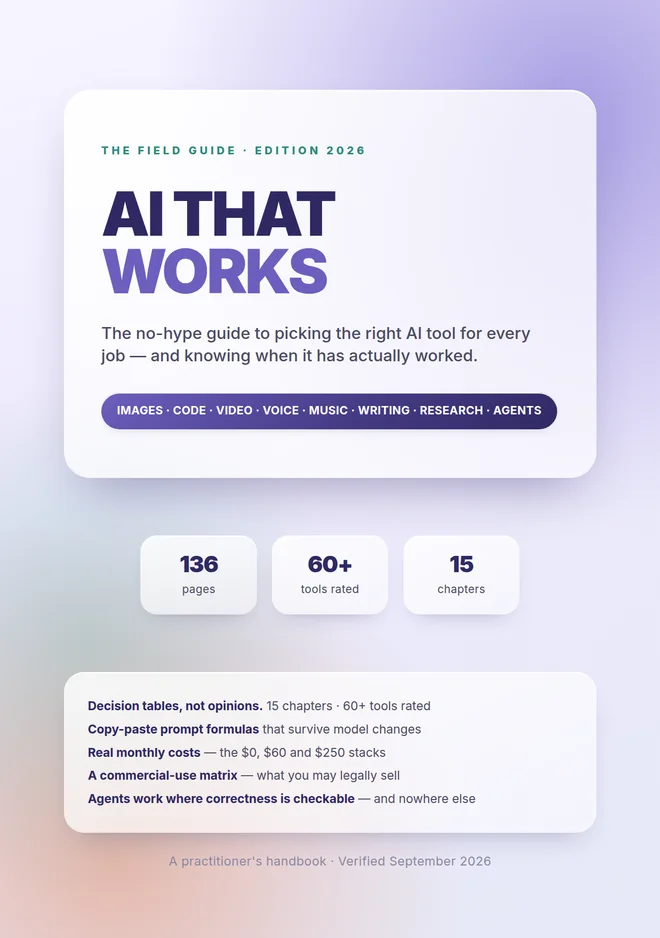
A book by Prague Core
The no-hype field guide: which tool for which job, how to steer it so it does what you asked, and what it really costs. Decision tables instead of opinions — and next to every answer, how you tell that it actually worked.
In progress Text and typesetting finished 4 September 2026 · in English
Most AI advice is either a hype thread or a ninety-minute video that ends with “it depends.”
This book is the opposite. Every chapter answers three questions, in this order: which tool, how to drive it and what it costs. Then it gets out of your way.
One idea runs underneath it. AI tools aren’t magic and they aren’t toys — they’re power tools with no safety guard: enormous leverage, zero judgement. The judgement has to come from a person, at two points: the specification up front and the verification at the end. The middle part, the part everyone posts about, is the easy part.
Changes on a scale of years
The method. How to frame a prompt, how to control an image model, how to review machine-written code, how to price that work and how to test a tool before you pay for it.
Changes on a scale of months
The names and numbers. Model versions, per-token prices, who currently leads which leaderboard. Marked [SEPT 2026] throughout, with a ten-minute protocol in chapter 15 for re-checking the lot.
People who only learn Layer 2 have to relearn everything twice a year.
Fifteen chapters. The book itself is in English, so the titles need no translating here.
On a book about AI this is the one thing you can either do properly or fake — and nobody finds out for a year.
Every price, tier and product name was checked against the vendor’s own pricing or documentation page, not taken from a secondary source. Deprecation dates come from the vendors’ own published pages.
Legal claims were checked against court records, the US Copyright Office and EU primary materials.
And where a matter is contested — a live lawsuit, a shifting licence, a benchmark that flatters whoever published it — it is labelled contested rather than presented as settled.
Preparation includes verification and layout checks: fact-checks against live pricing and terms, a licensing audit, legal claims checked against primary sources, a technical pass over every constant, an editorial pass, print QA over every rendered page, and a regression check after each of them.
One defect came back in five consecutive rounds — a claim corrected in one chapter and left standing in another. Because of it the book’s build runs two automated checks that compare the paired passages on every edit.
Typeset for 176 × 250 mm. Tables, verification boxes, and a verdict at the end of every chapter.
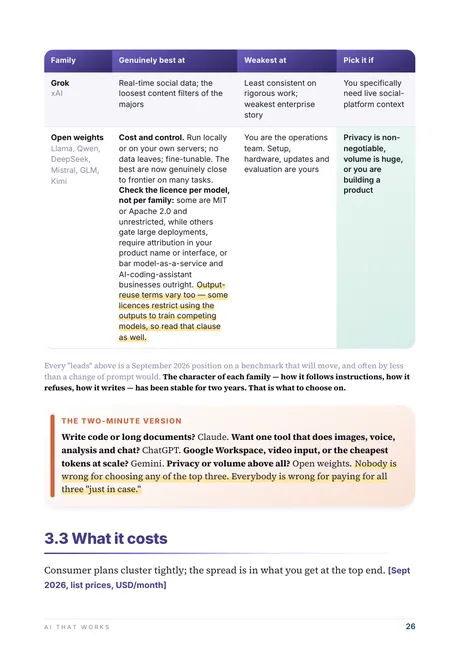
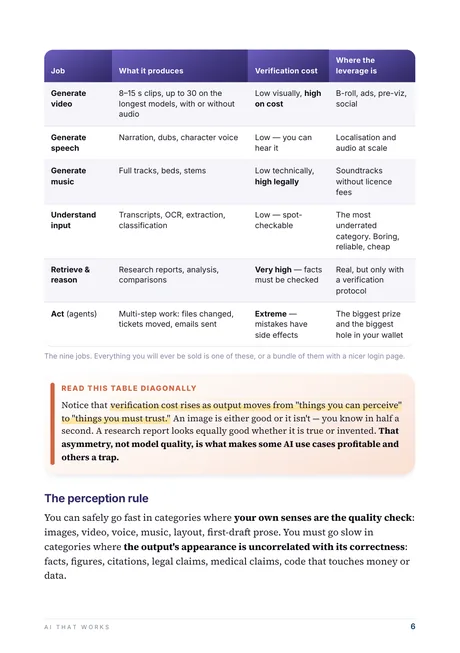
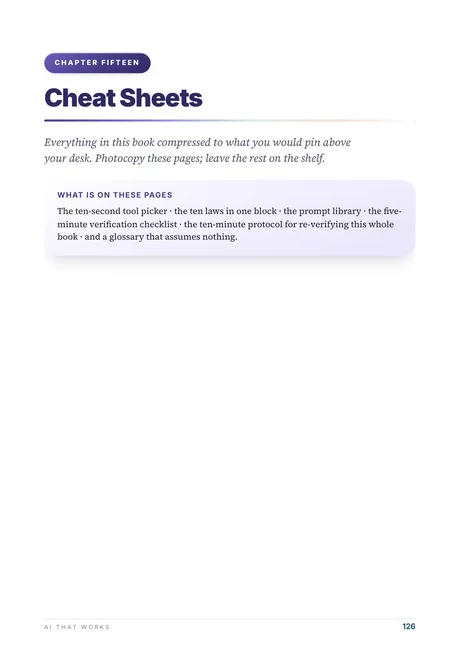
The text is written, checked and typeset — but the book is not published yet. It has no ISBN and no decision on how it will be distributed; until then there’s no price and no download link here. When that is settled, it will appear on this page.
We built this page the way we’d build yours. Want one like it for your product?
Or simply: info@praguecore.com